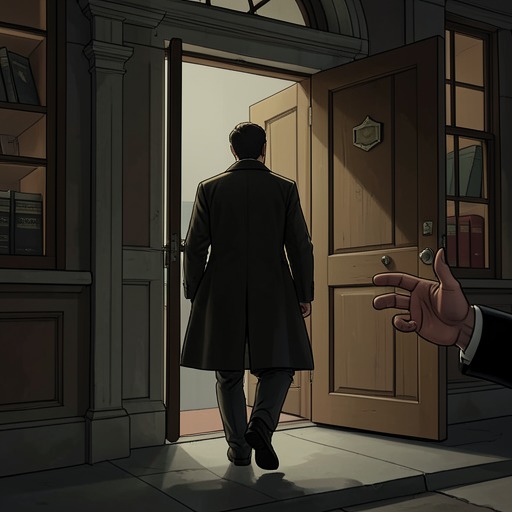
The neighboring apartment
Anxious PeopleThe neighboring apartment is an empty unit across the elevator from the apartment where the hostages are held. Initially an overlooked property with a juicer left behind, it becomes a possible hiding place for the Bank robber. Its importance rests on a convergence of ordinary circumstances: the owners have separated, the door’s lock was never changed, and Estelle still has a key from a private chapter of her past.
Layout and ownership
The Real estate agent describes the unit as almost identical to the hostage apartment, except for a slightly smaller closet. Its mobile reception is notably good, a practical selling point that the agent regards as important to prospective buyers. The couple who own it have split up and removed all the furniture; the juicer is the only item left. The apartment’s color is so unattractive that neither former partner seems to want it.
The unit has not yet appeared on the agency’s website. The Real estate agent has deliberately held it back because listing two nearby apartments at the same time could depress the price of both. This decision makes the empty property an undisclosed part of the viewing-day situation, even as it illustrates how the apartment is treated as a market asset whose value depends on the timing and presentation of a sale.
Estelle’s connection to the apartment
The apartment is tied to Estelle’s earlier affair: her lover lived there, and he died in the unit. When it was put up for sale, Estelle stood in front of a bookcase and imagined how her life might have unfolded if she had met him before Knut. The property therefore carries a private history that is invisible to the other people gathered in the hostage apartment, but becomes consequential when a key is needed.
A young couple later bought the unit and never changed its lock. Estelle has not entered it, but she has occasionally checked whether her old key still works; it does. She has also heard the current owners arguing through the thin walls while she smokes in her closet. The apartment is thus not simply vacant space to her: its unchanged lock and audible domestic life connect an earlier loss to the present couple’s failing relationship.
The proposed hiding place
When Jim notices the possibility that the Real estate agent may have the neighboring unit’s key, he suggests that the Bank robber could hide there. His plan depends on the police first concentrating on getting the hostages out, then assuming the robber remains inside the hostage apartment after the door is shut. He expects that officers will not immediately force their way into every other unit; they will take the hostages to the station for statements before searching further. The neighboring apartment offers a temporary gap between the presumed location of the robber and the place where she might actually be.
Estelle makes the plan actionable by giving the Bank robber the key. The old key is not merely a remnant of her affair but practical access to an empty home across the elevator. Estelle urges her to hide there until the crisis passes and then return to her daughters. The Bank robber hesitates because she has no home to return to, cannot pay rent, and does not want the hostages to lie to the police on her behalf.
Rather than disclose the hiding plan and make the others responsible for concealing it, the Bank robber proposes that they leave without knowing what happens after the door closes. They can truthfully report that she was still inside when they left and that they do not know where she went afterward. The hostages agree, and Roger carefully closes the door until its latch clicks. The neighboring apartment’s vacancy and the other unit’s presumed continued occupation together make the deception possible without requiring the hostages to invent what they witnessed.
Shelter and narrative significance
The apartment’s role in the escape sits against the broader housing insecurity in the story. The Bank robber cannot readily buy a home without money, while renting requires a substantial deposit; the neighboring unit, by contrast, stands empty because a separating couple has removed its furnishings and neither wants it. The contrast makes the vacant apartment a temporary refuge created not by an orderly housing system but by a chain of personal history, an unchanged lock, and a police response Jim expects to be limited by procedure.
After the hostage crisis, Estelle arranges for the Bank robber to have somewhere to live by making a home with her. The neighboring apartment is therefore crucial as an immediate hiding place, but it does not itself resolve the robber’s longer-term lack of housing. Its rooms briefly turn an undisclosed sale property into shelter, while its prior occupant’s death and Estelle’s memory give that practical escape a history extending well before the hostage-taking.